Close search
Popular searches
21 Oct 2026 UTC+8 views:
A 300-tonne steel casting travels only a few hundred metres from ladle to finished part, yet it has to clear two gates on the way. Miss the first and an entire heat of steel is scrapped, at a cost measured in millions. Miss the second and the part looks perfect, passes every dimensional check, and still fails in service. Both gates sit inside the same plant at Xinxiang Great Wall Casting Co., Ltd. — and neither of them can be outsourced.
Why Heavy Steel Castings Fail — and Where
A large casting can be lost twice. It is lost at the ladle when there is not enough liquid steel, when the pour is interrupted, or when the tapping temperature has drifted out of its window. It is lost again, weeks later, inside the section: residual stress and a coarse, uneven microstructure that no amount of final inspection can repair. The first failure is loud and expensive. The second is quiet, and far more dangerous — the part ships, the drawing is met, and the failure happens at the customer's site.
Gate One — Pour It Whole: Enough Steel, Enough Ladles, Right Temperature
Large steel castings are unforgiving about one thing: continuity. A cold shut, an interrupted stream or a spliced section is a defect you cannot see from the outside, and it becomes a crack initiation site under cyclic load.
This is why the melting shop is sized well above the weight of a single order:
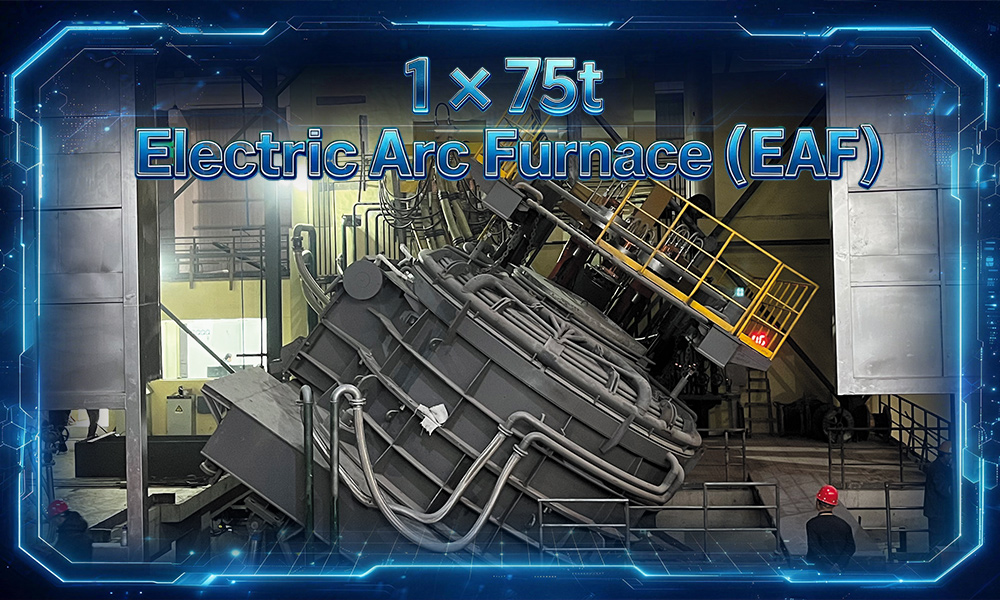
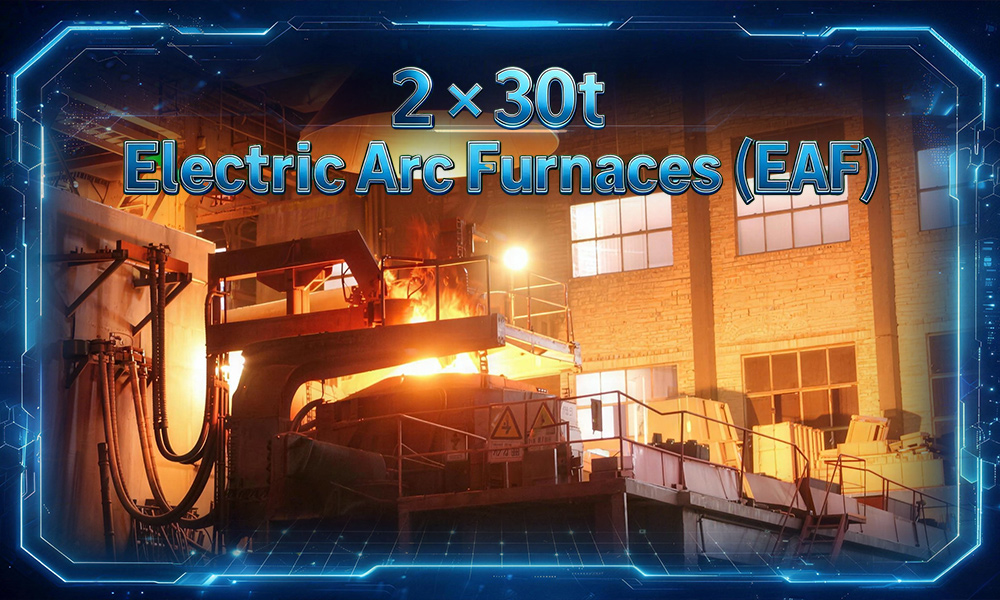
2 × 30 t electric arc furnaces plus 1 × 75 t electric arc furnace
, run in parallel so that several heats are available at the same moment.
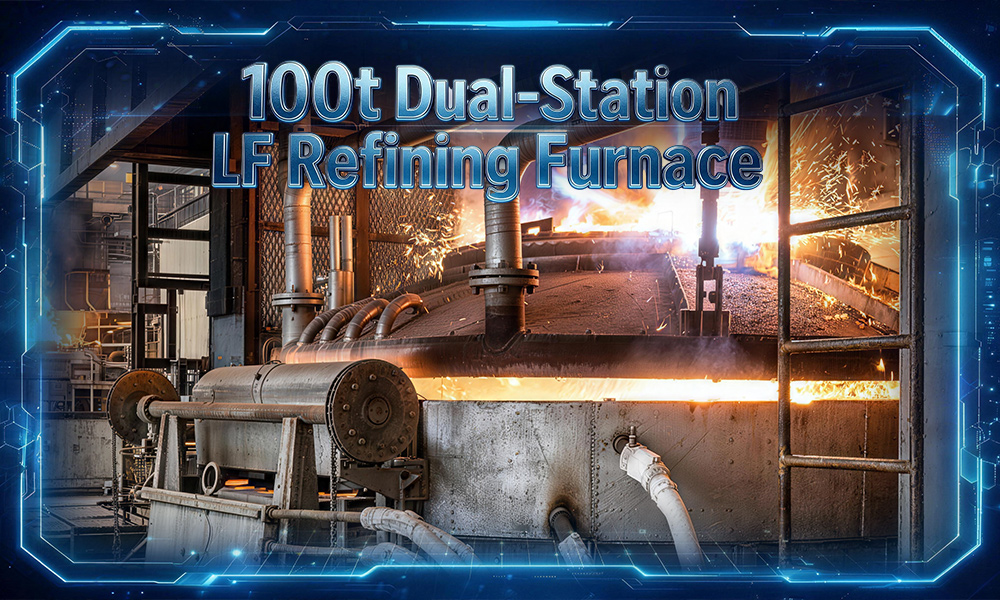
A 100 t double-station LF ladle refining furnace
that corrects composition and temperature before tapping, so what reaches the mould is inside the window and stays there.
Multi-furnace tapping and multi-ladle pouring
, feeding one heavy section from several heats simultaneously instead of sequentially.
What "one piece" actually buys you
For girth gears, slag pots, kiln tyres, stern posts and rudder horns, one-piece pouring is not a marketing claim — it is the difference between a part that survives a decade of cyclic load and one that starts cracking along a joint line. Parts up to 300 t are poured in a single continuous sequence, with no splice welds and no interrupted stream.
Gate Two — Heat It Through: A 910 °C Sauna for Steel
Pouring produces a shape. It does not produce a material. A thick section cools at a different rate on the surface than at its core, which leaves residual stress and an uneven grain structure locked inside the part. Left alone, that part will machine beautifully and fail early.
The heat treatment line is therefore built around one requirement: the whole section has to reach temperature, not just the skin.
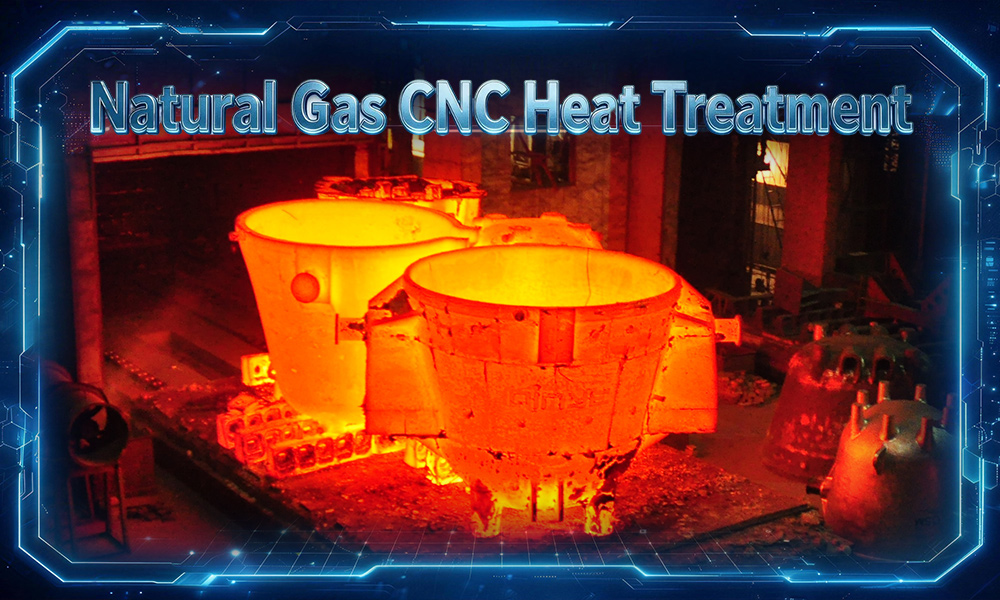
Car-bottom gas-fired CNC heat treatment furnace, chamber 13.5 × 8 × 5 m
— large enough to take a two-storey house, and large enough to load several heavy castings in one cycle.
Heating to 910 °C with full soaking
, then controlled cooling along a qualified process curve rather than in still air.
The outcome
: residual stress relieved, grain structure refined, hardness uniform from surface to core — in one pass, not after a rework loop.
In 2025 the company was granted a utility model patent
for the furnace car design, which shortens loading time and makes cycles more repeatable.
Hardness alone is not the point. Uniform hardness is.
Specifications at a Glance
| Item | Capability |
|---|---|
| Single piece weight | 5–300 t |
| Melting | 2 × 30 t EAF + 1 × 75 t EAF |
| Refining | 100 t double-station LF ladle furnace |
| Pouring method | Multi-ladle simultaneous pouring, one-piece, no splice welds |
| Heat treatment | Car-bottom gas furnace, 13.5 × 8 × 5 m, 910 °C, controlled cooling |
| Materials | Carbon steel, low-alloy steel, Mn steel (G20Mn5 / G24Mn6), high-Mn and heat-resistant grades |
| Typical parts | Girth gears, slag pots, kiln tyres, support rollers, stern posts, rudder horns, steam turbine cylinders |
| Standards | GB/T, ASTM, EN, or customer specification |
Frequently Asked Questions
Can a 300 t part really be poured in a single heat?
A single furnace heat is far smaller than 300 t. What is poured in one continuous sequence is the part: several heats are refined in parallel, tapped together and poured simultaneously through multiple ladles, so the mould fills without interruption and without cold joints. The metallurgical result is a single, continuous casting — not a joined one.
Which heat treatment is applied to heavy castings?
Heavy sections are normalised at 910 °C with a full soak through the section, then cooled along a controlled curve. The purpose is to remove residual stress from solidification and to refine the grain structure, so that mechanical properties are consistent at the core and not only at the surface.
What do you need to quote a large casting?
A drawing or 3D model, finished weight, material grade, applicable standard, machining allowance and NDT requirements (UT, MT, PT). With those five items a technical and commercial proposal can be issued without a follow-up round of questions.
Send your drawing and specification to our engineering team via thecontact page— proposals for parts from 5 t to 300 t are issued within two working days. You can also browse ourgirth gearandslag potpages for typical case studies.
----- END -----