Close search
Popular searches
29 May 2026 UTC+8 views:
Mill rollers serve as critical wear components within grinding equipment across industries such as cement, construction materials, power generation, and mining. Subjected to continuous material impact and abrasive wear over extended periods, their service life directly dictates production line efficiency and operational maintenance costs. Leveraging its ISO 3834 international welding management system certification, Great Wall Cast Steel has dedicated years to specializing in the butt-welding, hardfacing repair, and reinforcement of mill rollers. Utilizing automated welding equipment, customized wear-resistant welding consumables, and comprehensive process-wide quality control, the company delivers high-bond-strength, highly wear-resistant, and long-lasting repair and reinforcement services for rollers used in various vertical mills and roller presses—thereby empowering clients to reduce costs, enhance efficiency, and ensure the long-term, stable operation of their equipment.
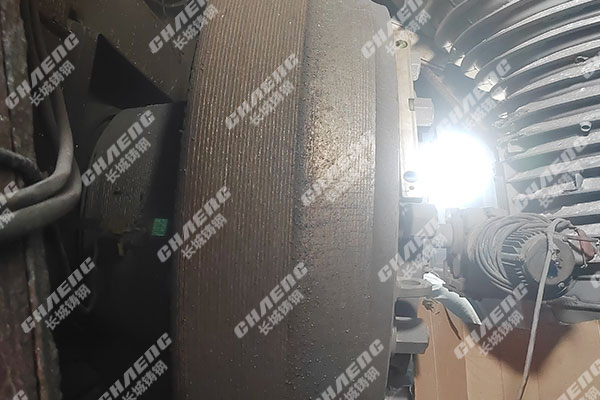
Hardfacing of Grinding Rollers (On-site)
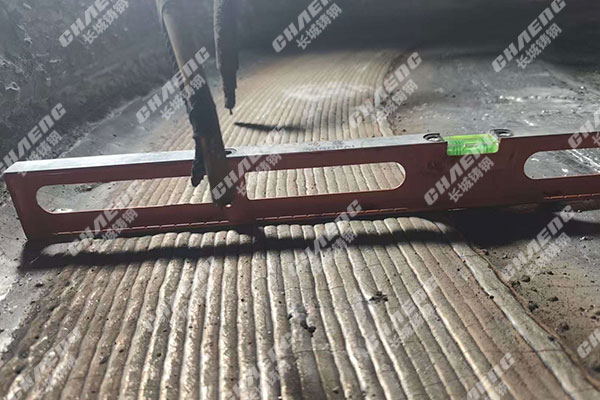
Grinding Disc Hardfacing Site
Mill roller surfacing (wear-resistant hardfacing) involves applying a protective layer—characterized by high strength, high hardness, impact resistance, and high-temperature durability—to the working surface of a mill roller. This is achieved using specialized wear-resistant alloy welding wires via automated open-arc or submerged-arc welding processes. This technique rapidly restores the roller's original dimensions, repairs wear-related defects, and enhances surface performance, thereby allowing old rollers to be "reborn anew" and ensuring that new rollers are "inherently stronger." Compared to the direct replacement of components, surfacing repair costs represent only 30% to 50% of the cost of a new part, while extending the service life to 1.5 to 3 times that of a new component; it is widely recognized within the grinding industry as a green and highly efficient solution.
----- END -----